
Efficient Workflows. Consistent Results. From Harvest to Bottling.
Great wine starts with controlling every step of the wine making process. By measuring and tracking sugar, must weight, pH, and ABV (alcohol by volume) with reliable tools, you can identify the ideal harvest time, monitor fermentation, protect stability, and confirm the final profile. EasyDens, SmartRef, pH2Go, and the Alcohol Meter turn complex data into clear, practical insight. This saves time during busy harvest days and cellar work, supports confident decisions, simplifies batch documentation, and improves repeatability from the first grape to the final glass.
Precision at Every Step of Winemaking

Harvest decisions with SmartRef & pH2Go

Fermentation tracking with EasyDens & SmartRef

Malolactic fermentation tracking with pH2Go

Finished ABV verification with the Alcohol Meter

In the Vineyard: When to Harvest
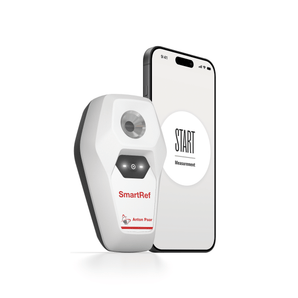
Winemaking starts in the vineyard, where sugar content and pH help define the right harvest time. Table wine grapes typically are harvested with a sugar content of 19 – 25 °Brix and a pH of 3.0 – 3.6. With SmartRef and pH2Go, you can measure both from just a few drops of grape juice. This makes it easier to assess ripeness, compare parcels, and estimate potential ABV, creating a stronger foundation for every step that follows.

Tracking the Fermentation
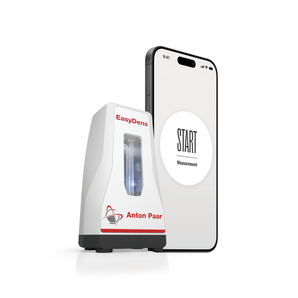
After harvest, the focus shifts to fermentation. Once the grapes are crushed and pressed, the must is ready, and yeast is added to start converting sugar into alcohol. Tracking must weight and alcohol development throughout this stage is essential to keep the process on course. Compare original gravity to current gravity to follow attenuation and ABV. Since fermentation can take ten days or longer, regular checks are key. With EasyDens and SmartRef, you can monitor fermentation quickly and precisely, spot unexpected changes early, and respond in time to keep your results stable and consistent.

Malolactic Fermentation Shaping the Style
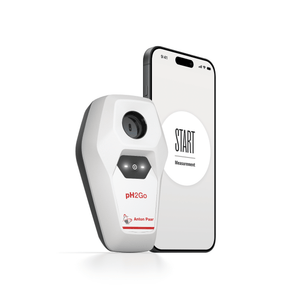
After primary fermentation, many wines, especially reds, continue with malolactic fermentation (MLF), converting malic acid into lactic acid. This softens acidity and shapes the final style. Regular pH checks with pH2Go help you follow acid balance, support microbial stability, and guide the wine toward the desired sensory profile with more confidence.

Confirm What’s in the Wine
Before bottling, reliable ABV results are essential to confirm the final wine profile. The Alcohol Meter takes center stage in this final control step, helping you to confirm the intended style, support batch consistency, and document results with confidence. pH2Go provides additional insights before release, as a lower pH supports color stability, improves microbial protection, and contributes to a more stable wine in the bottle.
Your Tools for Better Wine

SmartRef: Digital Refractometer
- Measures grape sugar to determine harvest time
- Estimates potential alcohol
- Density meter-comparable readings
- Just 0.4 mL per sample

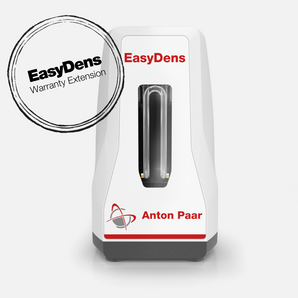
EasyDens: Digital Density Meter
- Monitors must weight throughout fermentation
- Reveals ABV and attenuation
- No alcohol correction needed
- Estimates residual sugar from gravity and acidity
- Just 2 mL per sample

pH2Go: Digital pH Meter
- Checks pH at harvest and during cellar work
- Supports malolactic fermentation and stability control
- Reduces spoilage risk and improve process confidence
- Just 0.5 mL per sample

Alcohol Meter: EasyDens & SmartRef Combo
Get a complete wine analysis before you bottle:
- ABV
- Total extract
- Energy
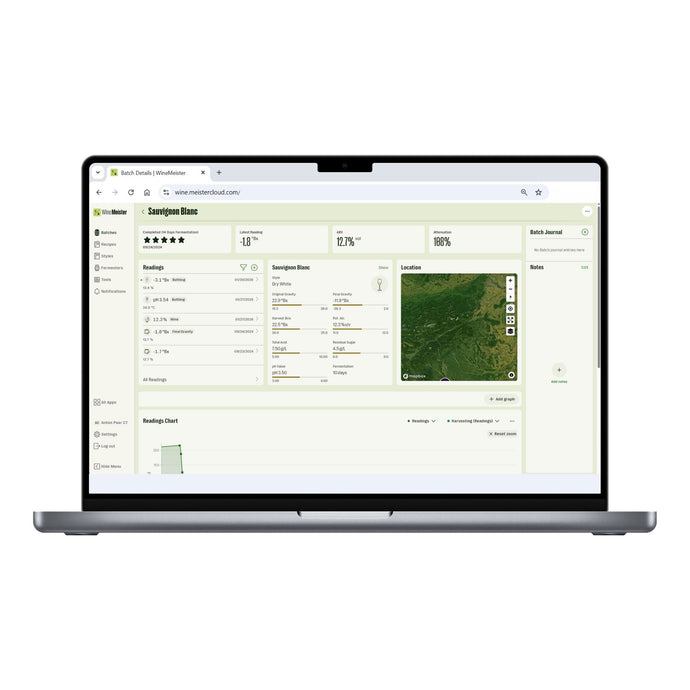
Wine Meister: Smarter Winemaking with App Integration
Wine Meister brings vineyard and cellar work together in one clear digital workflow. In the vineyard GPS-tagged harvest records let you map sampling points, compare parcels, identify ripeness zones, and return to the same locations season after season. During fermentation, visual trend graphs show how must weight develops over time, making daily process control easier, faster, and more precise.
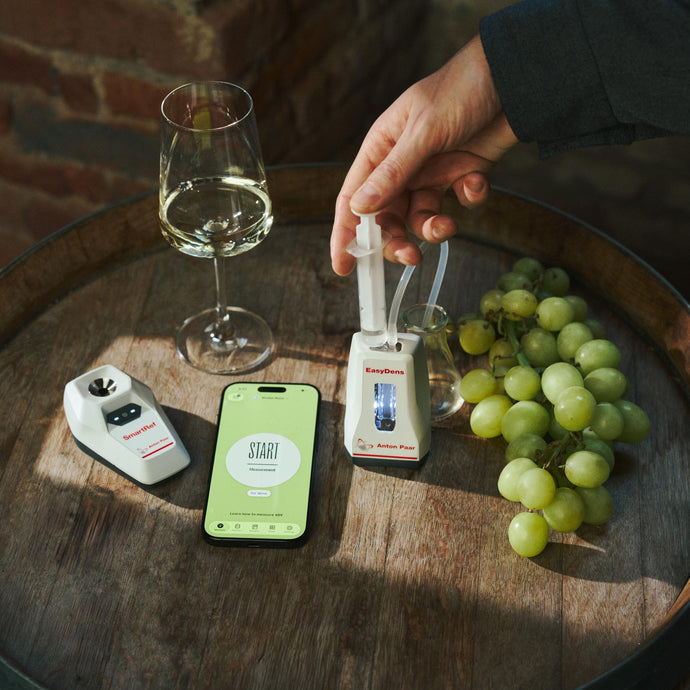
Measurements from SmartRef, EasyDens, pH2Go, and the Alcohol Meter are stored in one structured batch record, from harvest through bottling. Residual sugar also has a dedicated place in the workflow, since it is essential for determining sweetness, defining wine style, and supporting accurate labeling. For white wines, Wine Meister includes a residual sugar calculator that combines your EasyDens measurement results with total acidity, helping you determine residual sugar quickly. Cloud-synced across web, iOS, and Android. Export, report, and revisit any batch this season or vintages from now.
Supported Measurement Units for Winemaking
EasyDens and SmartRef support all common regional units for measuring must weight and grape sugar content.
SmartRef Measurement Units for Wine (ATC):
- Babo (°Babo)
- Baumé (°Bé)
- Brix (°Bx)
- KMW (°KMW)
- Oechsle CH (°Oe)
- Oechsle GER (°Oe)
- Potential alcohol Brix (%v/v)
- Potential alcohol Oe (%v/v)
- Temperature (°C/°F)
EasyDens Measurement Units for Wine (ATC):
- Babo (°Babo)
- Baumé (°Bé)
- Brix (°Bx)
- KMW (°KMW)
- Oechsle (°Oe)
- Specific gravity (SG 20/20) (SG 20/4) (SG 15/15)
- Est. Alcohol by volume (%v/v)
- Est. Attenuation (%)
- Est. Residual sugar (g/L)
- Sugar concentration (g/L)
- Temperature (°C/°F)
pH2Go Measurement Units for Wine:
- pH value
- Temperature (°C/°F)
Alcohol Meter Measurement Units for Wine (ATC):
- Alcohol by volume (%v/v)
- Energy (kcal/100 mL), (kJ/100 mL)
- Total extract (g/L)
- Temperature (°C/°F)
FAQs
Why is pH important in winemaking?
pH plays a vital role in microbial stability, sulfur dioxide effectiveness, color, and overall taste balance. Regular monitoring helps you react earlier at harvest, during alcoholic fermentation, throughout maturation, and before bottling. It is also the key parameter for tracking malolactic fermentation.
Which types of wine can be measured with the Alcohol Meter?
It can measure the ABV of finished wine samples such as sparkling wine, white wine, rosé wine, red wine, port wine, sake, and mead.
Do I need both SmartRef and EasyDens for wine?
SmartRef is ideal for quick measurements in the vineyard. Its fermentation readings are automatically corrected based on the original gravity, making them comparable to hydrometer values. EasyDens is the professional choice for fermentation tracking, delivering precise density measurements without any correction afterward. Used in combination, the two devices can directly measure the ABV, total extract, and calories of finished wine.
Can the EasyDens determine the residual sugar?
Yes. By combining EasyDens density measurements taken during fermentation with the total acidity value, the Wine Meister app provides a simple way to calculate residual sugar in white wines.
Why do I need SmartRef in addition to the EasyDens to measure final alcohol in finished wine?
Finished wine contains alcohol, sugar, acids, and other dissolved components. Because all of them affect the measurement, density alone is not enough to determine alcohol precisely.
EasyDens measures density, while SmartRef measures the refractive index. Alcohol affects these two values differently: it decreases density but increases refractive index.
By combining both readings, the EasyDens and SmartRef Combo can separate the alcohol effect from the other components in the wine. This makes it possible to determine the ABV of finished wine directly.
How do I clean EasyDens, SmartRef and pH2Go?
Simply rinse the device with distilled water after each measurement.
Explore our devices and level up your winemaking process