
Better Coffee Starts with Better Insights
Great coffee comes from understanding what happens in your brew. When you know how strong your coffee is and how efficiently it’s extracted, you can move beyond trial and error and start brewing with intention. With our coffee analysis tools, SmartRef and pH2Go, you can measure total dissolved solids (TDS), extraction yield, and pH, to make confident decisions instead of guessing. This leads to more consistent results, better balance between strength, acidity, and sweetness, and the ability to recreate your best brews anytime. Whether dialing in espresso or refining filter coffee, you gain full control over your process - and consistently great results in every cup.
Understanding Extraction Through TDS With Less Than 1 mL Sample

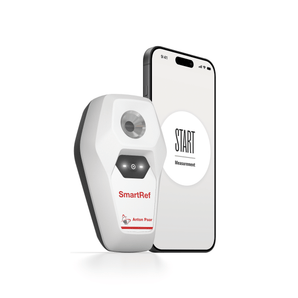
TDS measurement with SmartRef

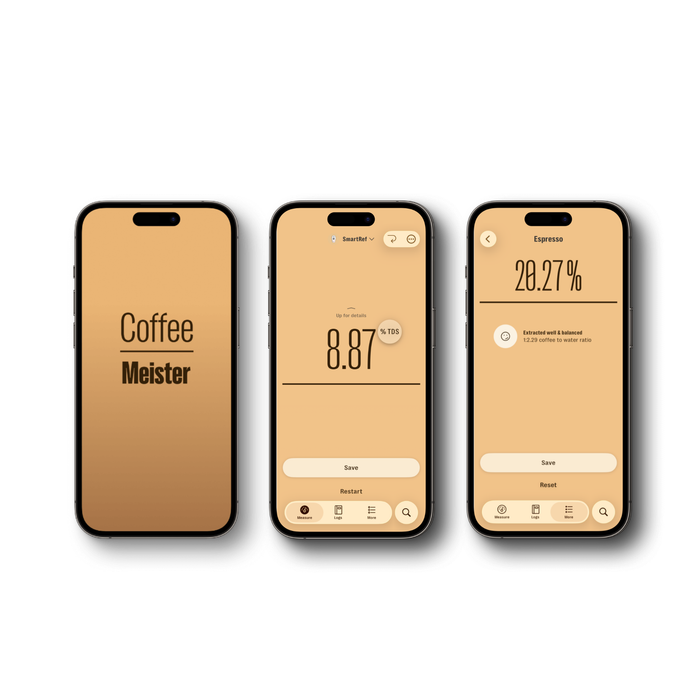
Extraction yield calculation with the Coffee Meister App

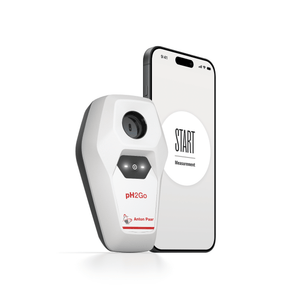
pH control for brew water and coffee with pH2Go
Understanding Extraction Through TDS
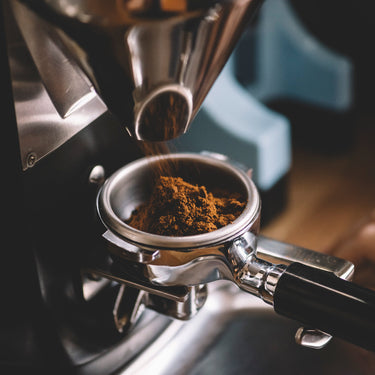
Coffee quality is defined by how precisely flavors are extracted. Measuring Total Dissolved Solids (TDS) reveals how much of the coffee is actually dissolved in your brew and gives a clear indicator of strength and balance. A stronger-tasting coffee, like espresso, has a higher TDS, while a weaker coffee, like filter coffee, has a lower TDS.
Typical TDS values:
Ristretto: > 12 %TDS
Espresso: 8 – 12 %TDS
Lungo: 2 – 8 %TDS
French press: 1.4 – 1.7 %TDS
Filter coffee: 1.2 – 1.5 %TDS

From Brew to Data Driven Optimization
A small coffee sample on the SmartRef gives you a fast & precise TDS reading. When combined with key brew parameters such as dose and beverage weight, the extraction yield can be calculated. The result is a clear, actionable insight that helps you evaluate each brew, refine recipes, and achieve consistent quality with confidence.
✓ Extraction yield: This parameter provides insight into the extraction efficiency and the percentage of soluble coffee compounds that are extracted from the coffee grounds into the final brewed beverage. The gathered extraction yield quantifies coffee strength and taste.

Brew Water & Role of Acidity
Water pH sets the foundation for both extraction and flavor. In an optimal range of about pH 6.5 to 7.5, water supports a more balanced brewing environment. Because water interacts with the coffee’s natural acids and behaves differently depending on its buffering capacity, pH reveals more about why a cup tastes bright, balanced, or flat. Measuring the pH of the finished coffee completes that picture by showing how these factors appear in the final cup. That added understanding helps you refine your process, evaluate coffee more consistently, and brew with greater confidence.
✓ Understand your coffee better by measuring the pH of both your brew water and your cup.
Smart Tools for Consistent Coffee Brewing

SmartRef: Digital Refractometer
Measure coffee strength with precision and gain instant insights into extraction.
- ±0.03 %TDS precision for reliable measurements
- Extraction yield calculation

pH2Go: Digital pH Meter
Analyze acidity in both brewing water and coffee to refine flavor profiles.
- Measure pH levels of water and brewed coffee
- Supports optimization of water composition for better taste
Coffee Meister App: Turning Data into Better Brewing Decisions
The Coffee Meister mobile app transforms every measurement into clear, actionable brewing insights. Seamlessly connecting with SmartRef and pH2Go via Bluetooth® Low Energy, it automatically records TDS and pH data and organizes them into structured brew sessions. It measures TDS and provides two calculation modes: a fixed %TDS and a customizable %TDS factor for more advanced control. The app also calculates extraction yield using key brew parameters such as dose, beverage weight, and TDS - removing the need for manual calculations and minimizing errors.
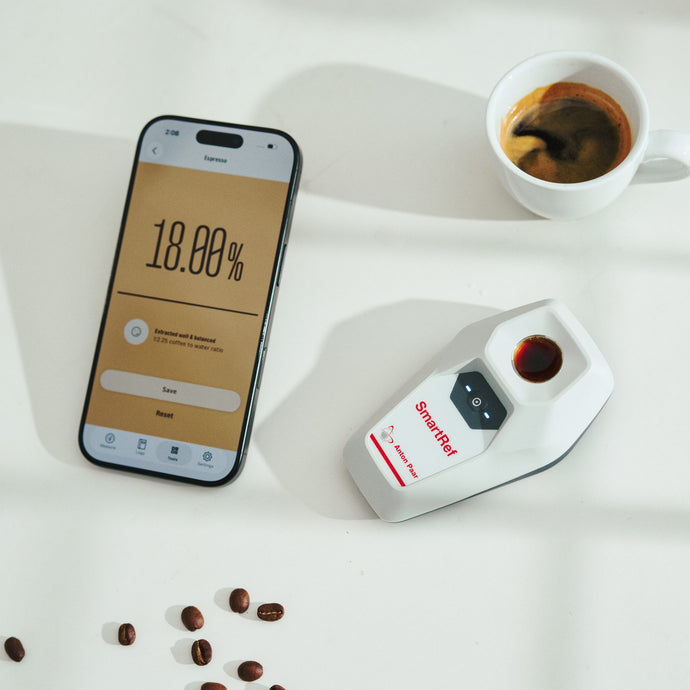
You can compare different brewing methods and visualize results over time to uncover trends and improvements. Pick your brew method, espresso, filter, French press, and the graph shows the min/max TDS target so you know instantly if you're in the recommended range. Integrated calculators and guided workflows support optimizing grind size, brew ratio, and extraction for consistent quality. Automatic temperature compensation ensures reliable readings under varying conditions. Whether perfecting espresso or fine-tuning pour-over recipes, Coffee Meister offers a precise, data-driven way to elevate your coffee brewing.
Precision Parameters for Better Coffee Analysis
Precise coffee analysis depends on accurate measurement of both extraction and the variables that influence it. SmartRef determines TDS via refractive index measurement with high precision of 0.03 %TDS, requiring only 0.4 mL of sample and featuring automatic temperature compensation (ATC).
Complementing this, the pH2Go enables fast and precise pH measurement of both water and brewed coffee, with an accuracy of ±0.02 pH using just 0.5 mL of sample. Its robust, glass-free ISFET sensor ensures long-term durability, while guided calibration with ATC, easy cleaning, and low-maintenance storage make it ideal for everyday use.
SmartRef Measuring Units for Coffee brewing:
- Brix (°Bx)
- Temperature (°C/°F)
- Total dissolved solids (%TDS)
pH2Go Measuring Units for Coffee brewing:
- pH value
- Temperature (°C/°F)
FAQs
What does TDS mean in coffee and why should I care?
TDS (Total Dissolved Solids) describes the concentration of dissolved coffee solids in the brewed coffee. It is a key indicator of brew strength and helps you evaluate balance, flavor, and overall cup quality.
What is extraction yield?
Extraction yield reflects how much of the coffee grounds were extracted into the final beverage. Calculated from TDS together with brew parameters such as beverage weight and coffee dose, it helps you assess extraction performance more clearly.
Do I need both SmartRef and pH2Go?
SmartRef is required to measure TDS and calculate extraction yield. The pH2Go complements the process by offering additional insights into water and coffee acidity, helping you refine flavor.
Is the system compatible with different brewing methods?
Yes, the system can be used across a wide range of brewing techniques, including espresso, filter coffee, immersion, and more.
Can I fill hot coffee into the sample well of SmartRef and pH2Go?
Yes. Both devices can handle hot samples up to 80 °C in the measurement cell. For best performance, the sample and device should be at a similar temperature. This supports faster measurements and more precise results.
Explore our devices and level up your coffee quality