
From Harvest to Storage
Producing consistently high-quality honey starts with knowing exactly what’s happening at every stage of your process. When sugar content, moisture, and pH are clearly measured and understood, you gain full control - from harvest to storage. With reliable insights into these key parameters with SmartRef and pH2Go, you can make confident decisions, reduce the risk of fermentation, and manage crystallization more effectively. Instead of relying on assumptions, you work with precise data that helps you maintain optimal conditions throughout. The result: better consistency, longer shelf life, and honey that meets your quality standards every time - batch after batch.
Consistent Honey Quality at Every Step

%water measurement with SmartRef

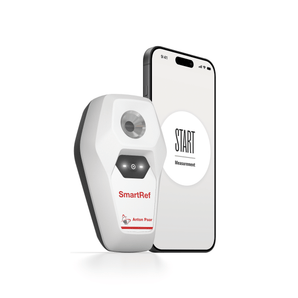
Brix measurement with SmartRef

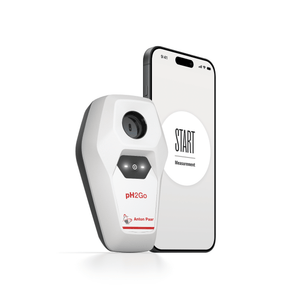
pH measurement with pH2Go

Before Harvesting
The process starts in the hive, where bees naturally reduce the water content of nectar and transform it into stable honey. Your job is knowing when they are done. During the active season, regular frame inspections help you assess colony health, honey maturity, and the right moment for harvest.
Harvesting too early can compromise quality and increase the risk of fermentation. With precise insight into water and sugar content using the SmartRef, you can make this decision with confidence. A water content below 18 % indicates that the honey is sufficiently ripened, giving you a reliable basis for what comes next.

During Extraction
After harvesting, the frames are transferred to the extraction area, where the honeycomb is uncapped and placed in a centrifugal extractor. Spinning the frames releases the honey from the cells, then collected and filtered to remove wax particles before being stored in clean containers.
At this stage, the focus is on efficient separation without altering the honey’s natural composition. By monitoring water content and Brix with the SmartRef, you stay in full control of your target range. Any deviations become immediately visible allowing you to act early.

After Extraction and Before Filling
Before filling the honey into jars, it’s all about final verification. Small variations in composition can impact stability over time, so a last check is key. Confirming water content remains below 18 % and verifying Brix with SmartRef ensures your honey is ready for storage. Adding pH measurements with pH2Go gives you a deeper understanding of product quality. pH is a vital indicator of fermentation performance and product stability, helping you spot improper fermentation early and support longer shelf life. By monitoring pH, you can catch issues before they lead to spoiled batches.
The result is a product you can trust: consistent, stable, and meeting your quality standards batch after batch.
Professional Tools for Beekeeping

SmartRef: Digital Refractometer
- Measures water content and Brix with an accuracy of ±0.2 °Brix
- Guides harvest, monitors extraction, verifies bottling
- Stainless steel sample well for easy cleaning

pH2Go: Digital pH Meter
- Early warning for fermentation & spoilage risk
- Fast measurements in honey with high accuracy of ±0.02 pH
- Easy-to-clean sample well keeps handling simple
Lab Meister app: Smart Honey Control, Made Simple
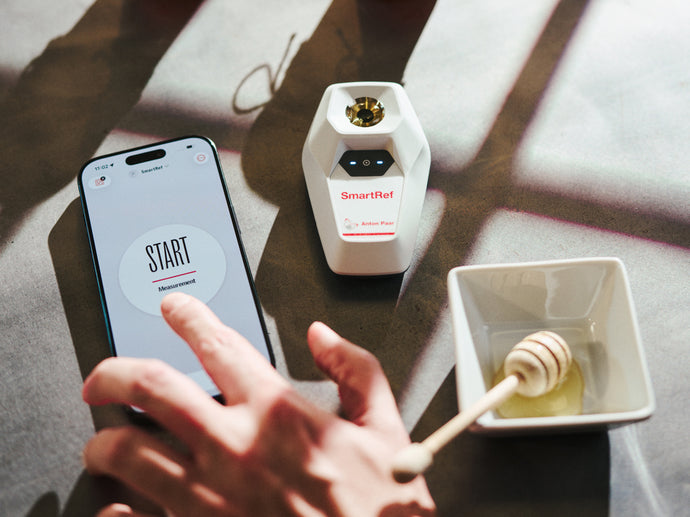
The Lab Meister app streamlines honey analysis - from first checks before harvest to final quality control before storage or sale. Connected to your SmartRef and pH2Go via Bluetooth® Low Energy, it delivers precise %water, Brix and pH values in seconds. Measurements start instantly, units are easy to select, and results are clear and ready to use in your daily workflow. Adjustment and calibration routines are fully integrated and guided step by step, ensuring consistent and reproducible results without added complexity. Automatic temperature compensation ensures reliable results, even under changing conditions. No paper logs, no transcription errors, no lost data when the season gets busy.All measurement dataareautomatically organized in structured logs, making documentation, traceability, and long-term quality monitoring simple and efficient.
Supported Measurement Units for Honey Analysis
SmartRef Measuring Units for Honey:
- Moisture in honey (%water)
- Brix (°Bx)
- Temperature (°C/°F)
pH2Go Measuring Units for Honey:
- pH value
- Temperature (°C/°F)
FAQs
What is the ideal water content of honey and why does it matter?
For stable, high-quality honey, the water content should typically be below 18%. At this level, the risk of fermentation is low, helping you maintain shelf life, consistency, and overall product quality.
Values between 18% and 20% can still be acceptable, but they leave less room for error. Even small variations in storage conditions can increase the likelihood of fermentation.
Once the water content exceeds 20%, the honey becomes significantly more prone to spoilage and is generally considered unsuitable for long-term stability.
Do I need to prepare my honey before measuring with SmartRef?
Yes. Proper sample preparation is key to getting reliable results.
Honey is a natural product, and its components separate over time, so always homogenize before testing.
Why do I need to measure the pH of honey?
Honey is naturally acidic, typically with a pH between pH 3.2 and pH 4.5. Measuring pH helps you confirm that your honey stays within this expected range and maintains its natural integrity. This acidity is more than just a characteristic - it’s a key factor in preservation. A stable pH supports resistance to microbial growth and contributes to a longer shelf life.
When pH rises, honey becomes less acidic, increasing the risk of fermentation - especially if moisture levels are also elevated. By monitoring pH, you gain early insight into potential quality issues and can act before they impact your final product.
What are typical pH ranges in honey?
- Acacia: pH 3.5 - 4.5
- Multifloral: pH 3.3 - 4.2
- Linden: pH 3.5 - 4.3
- Forest / Honeydew: pH 4.0 - 5.5
- Chestnut: 3.7 - 4.5
- Manuka: 3.2 - 4.0
Explore our devices and improve your honey quality