
Confidence at Every Stage, from Apple to Bottling.
Cider combines tradition and modern craft in a way only few beverages do. From fresh and crisp to rich and complex, every style depends on the following key factors: controlled fermentation, balanced acidity, and precise alcohol content. Producing consistent, high-quality cider starts with understanding what’s happening inside your batch. By measuring Brix (sugar content), tracking fermentation and ABV (alcohol by volume) development, and monitoring pH, you gain clear insight into every stage of the process. With reliable data from EasyDens, SmartRef, pH2Go and the Alcohol Meter, you can make precise adjustments with confidence. No guesswork, no surprises - just informed decisions that improve both efficiency and outcome. The result: balanced, consistent cider, batch after batch.
Control at Every Step of Cider Making

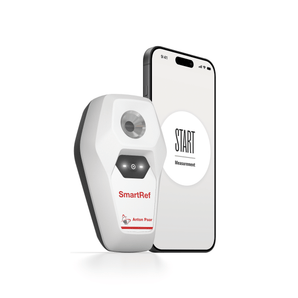
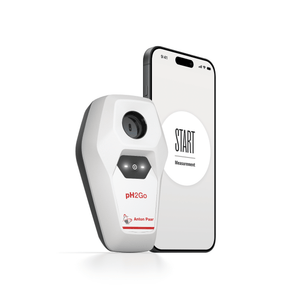
Brix measurement and pH at harvesting with SmartRef & pH2Go

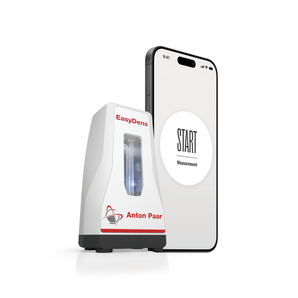
Fermentation tracking with EasyDens

ABV measurement of finished cider with the Alcohol Meter

Set the Foundation for Great Cider
Great cider starts with the right harvest time. Apples are usually harvested at 12-18 °Brix, while pH often ranges from 3.2-3.8, depending on variety, ripeness, and malic acid content. With SmartRef, Brix can be checked directly at harvest and again after pressing to assess sugar content and batch consistency. pH2Go helps assess acidity for stability and flavor balance.

Shape Flavor Through Controlled Fermentation
Fermentation shapes cider’s structure, alcohol content, and aroma. As yeast converts sugar into alcohol and CO₂, stable temperature, yeast, and nutrients are key. EasyDens tracks density to follow sugar consumption and ABV development, while pH2Go helps monitor yeast activity, spot deviations early, and define the ideal endpoint.

Refine, Verify and Prepare for Bottling
Once fermentation is complete, the focus shifts to refinement. Clarification, carbonation, and final adjustments define the finished style and ensure stability. Accurate ABV determination is essential at this stage – for both quality control and reliable labeling. By combining EasyDens and SmartRef as an Alcohol Meter, density and refractive index are measured together and automatically processed in the app. At the same time, a final pH check with pH2Go helps ensure microbial stability, shelf life, and the desired taste balance before bottling.
Professional Tools for Cider Makers

SmartRef: Digital Refractometer
- Brix measurement of apple juice
- Wide measuring range: 0 to 85 °Brix

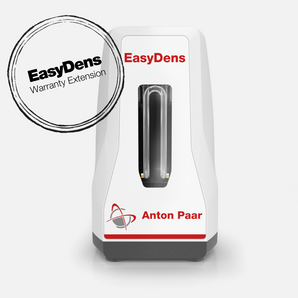
EasyDens: Digital Density Meter
- Fermentation tracking in Brix and specific gravity
- Reveals sugar consumption, ABV, and attenuation

pH2Go: Digital pH Meter
- Checks pH at harvest, after pressing, and during fermentation
- Ensures microbial stability

Alcohol Meter: EasyDens & SmartRef Combo
- Direct ABV measurement without distillation
- Accurate results with ±0.5 %v/v
Smart Cider Control with Wine Meister App
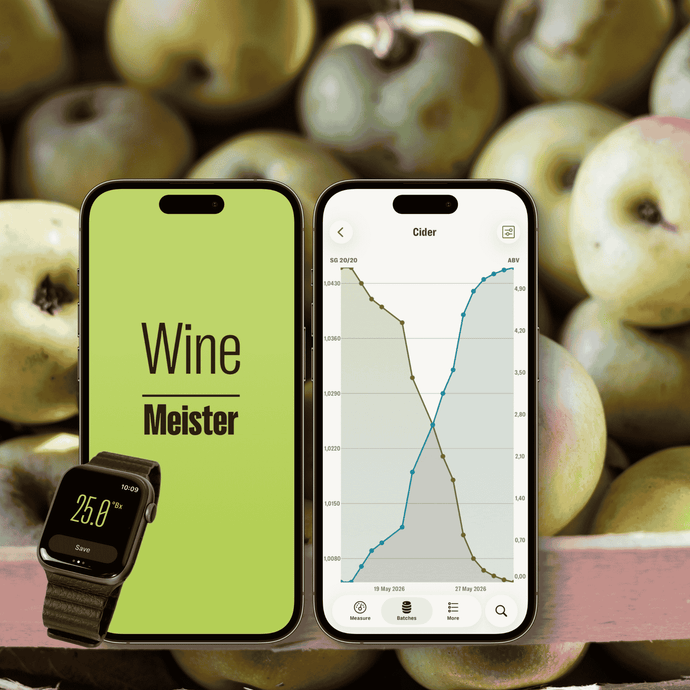
The Wine Meister app guides you through a seamless measurement workflow - from harvest to final ABV determination. It supports all key units that are relevant for cider production. By comparing original and final gravity within a batch, the app estimates ABV and attenuation. Your data is stored in structured batches, making it easy to follow fermentation graphs, compare production runs, and continuously improve your process. The integrated Brix-acid calculator in the Wine Meister app further refines your readings and delivers more accurate Brix values. With GPS-supported harvest tracking, your measurements gain context. You know exactly which orchard and even tree the reading came from. You can see exactly where each measurement was taken and identify differences between orchard areas.
Key Measurement Parameters for Cider Production
✓ SmartRef measures the refractive index of apple juice and requires only 0.4 mL of sample for precise Brix measurements with an accuracy of ±0.2 °Brix.
✓ EasyDens measures density and helps track fermentation with an accuracy of ±0.001 g/cm³. Only 2 mL of sample is required.
✓ pH2Go features a completely glass-free pH sensor that requires only 0.5 mL of sample. It is easy to clean, even after measuring sticky must, can be stored dry, and provides highly accurate pH measurements.
SmartRef Measuring Units for Cider:
- Brix (°Bx)
- Temperature (°C/°F)
EasyDens Measuring Units for Cider:
- Brix (°Bx)
- Est. Alcohol by volume (%v/v)
- Est. Attenuation (%)
- Specific gravity (SG 15/15) (SG 20/20) (SG 20/4)
- Temperature (°C/°F)
pH2Go Measuring Units for Cider:
- pH value
- Temperature (°C/°F)
Alcohol Meter Measuring Units for Cider:
- Alcohol by volume (%v/v)
- Temperature (°C/°F)
FAQs
Which types of cider can be measured with the Alcohol Meter?
It supports finished cider samples with an alcohol content from 3-10 %v/v. This covers a wide range of cider styles, from lighter, lower-alcohol ciders to traditional and hard ciders.
Do I need to prepare my cider before measurement?
Yes, proper sample preparation is essential for accurate, reproducible results. Please degas and filter your sample before the measurement. A clean, degassed sample ensures stable readings and full confidence in your results.
How can I tell when cider fermentation is finished using EasyDens?
You can track fermentation easily by measuring density or Brix with EasyDens on a regular basis. As fermentation progresses, sugar is converted into alcohol, causing both values to steadily decrease. Fermentation is complete when your readings remain stable and do not decrease anymore. At this point, the available sugar has been fully converted, and the process has reached its endpoint.
Why is pH important in cider production?
pH is a vital factor that directly influences microbial stability, fermentation performance, and overall taste. Kept in the right range, it helps prevent spoilage, supports healthy yeast activity, and ensures a consistent, reliable flavor profile. A lower pH acts as a natural barrier against unwanted microorganisms. As pH rises, the risk of spoilage, haze, and off-aromas increases.
For stable quality, cider should stay below pH 3.5.
Explore our devices and level up your cider